
Start with the information you already know
A new-home project does not need to be completely solved before the first construction conversation, but it helps to separate confirmed information from decisions that are still open. Write down the property location, the type of home being considered, the current design stage, and any target dates that matter to you.
This simple step makes the first discussion more useful because the contractor can understand whether the project is still conceptual, already designed, awaiting approvals, or ready for a more detailed construction review. It also prevents early assumptions from being mistaken for final requirements.
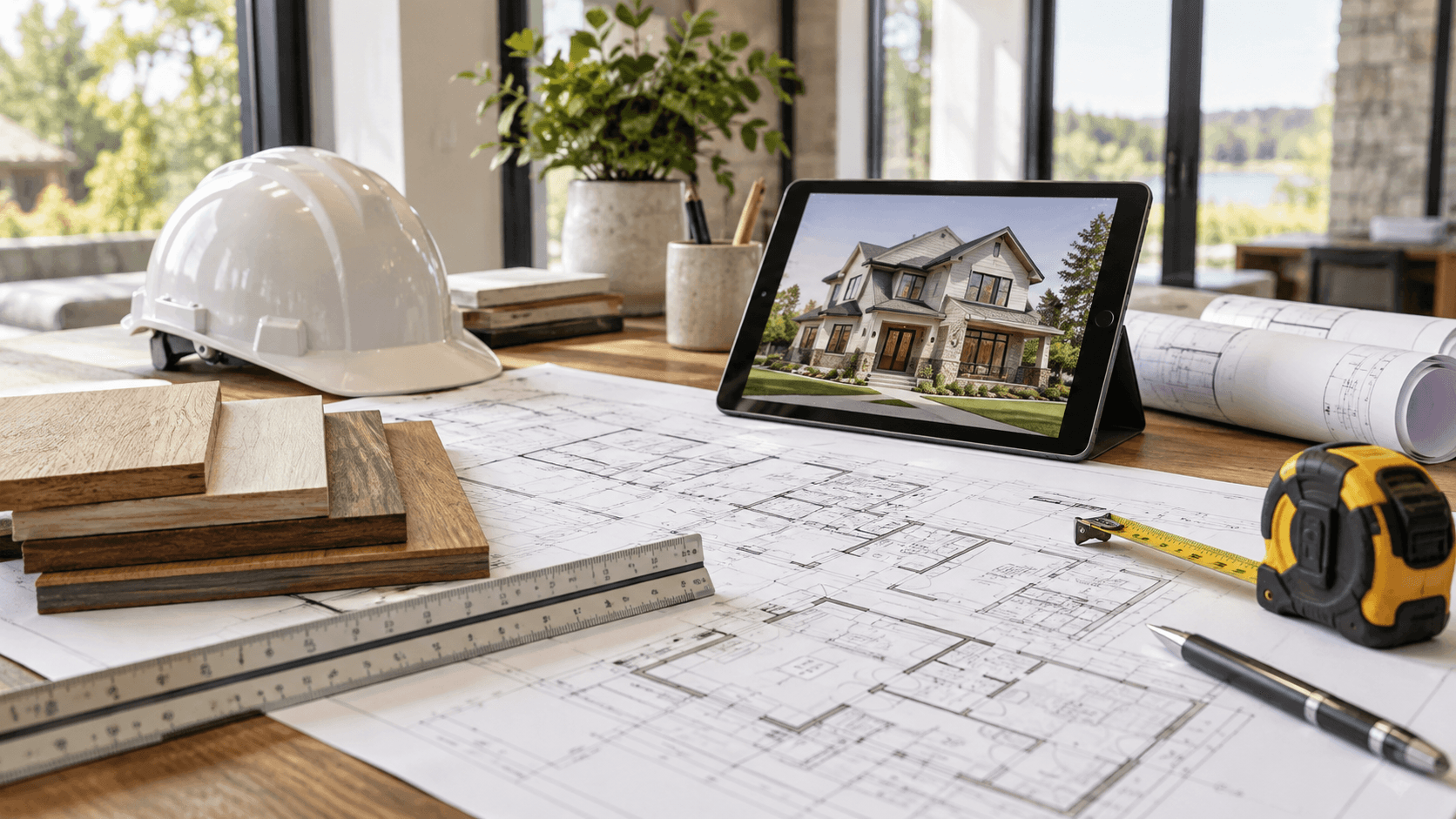
Organize plans and supporting documents
If you have architectural or structural plans, keep the most current set together and label revisions clearly. Residential construction depends on coordinated information, so an outdated drawing can create confusion around dimensions, openings, elevations, structural conditions, or finish transitions.
Other useful material may include surveys, site information, engineering documents, permit-related correspondence, selections, or written notes about decisions that affect the intended build. The exact document set depends on the project; the goal is simply to make the available information easy to review.
Think about the site as well as the house
The building itself is only part of the construction picture. Access, grade, staging space, neighboring conditions, delivery routes, utilities, and existing site features can influence how a project is organized. These details do not need to be fully analyzed by the homeowner, but they are worth identifying before work is discussed in detail.
- Property address and known access points
- Known slope, drainage, or terrain considerations
- Existing structures or site features that may affect access
- Any known permit, utility, or inspection dependencies
- Space limitations for materials, equipment, or deliveries
Define priorities instead of forcing a fixed answer too early
Homeowners often begin with several competing priorities: timing, layout, materials, future flexibility, and budget. Rather than presenting every preference as immovable, identify which decisions matter most and which can still be evaluated. That gives the planning conversation room to account for the actual project conditions.
A useful construction discussion should connect priorities to scope. For example, a design choice may affect framing, weather protection, sequencing, or material lead time. Understanding those relationships is more valuable than treating every selection as an isolated item.
Prepare questions for the next step
Before contacting a residential builder, make a short list of questions about the current stage of your project. Ask what information is needed next, what should be resolved before a later construction stage, and which decisions could affect scheduling. This creates a more concrete path forward than asking only for a general price before the scope is understood.
Big Creek Concrete Incorporated provides a residential project inquiry form where you can describe the project location, stage, plans, timeline, and current needs. Submitting the form starts a discussion; it does not create a construction contract or binding estimate.